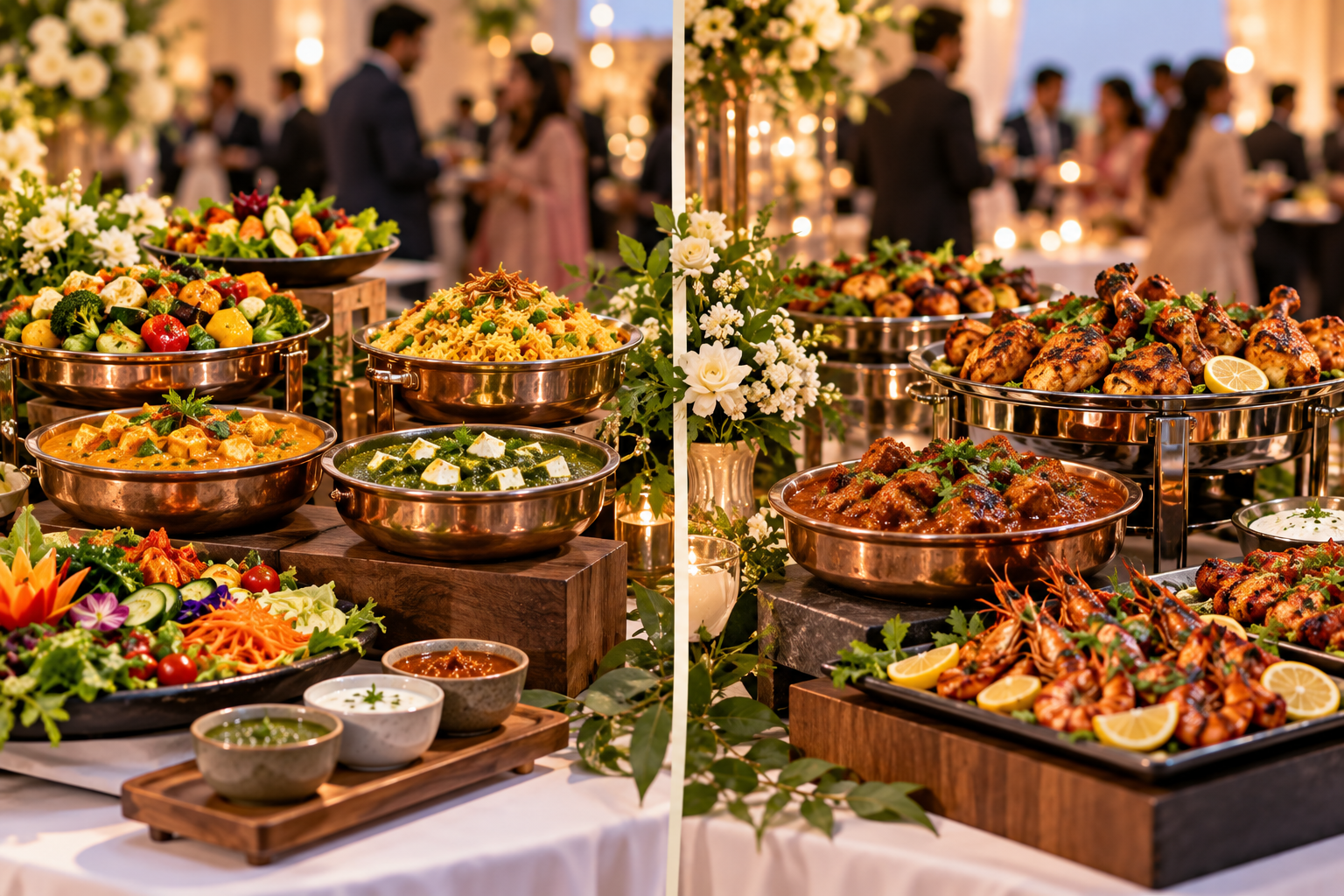
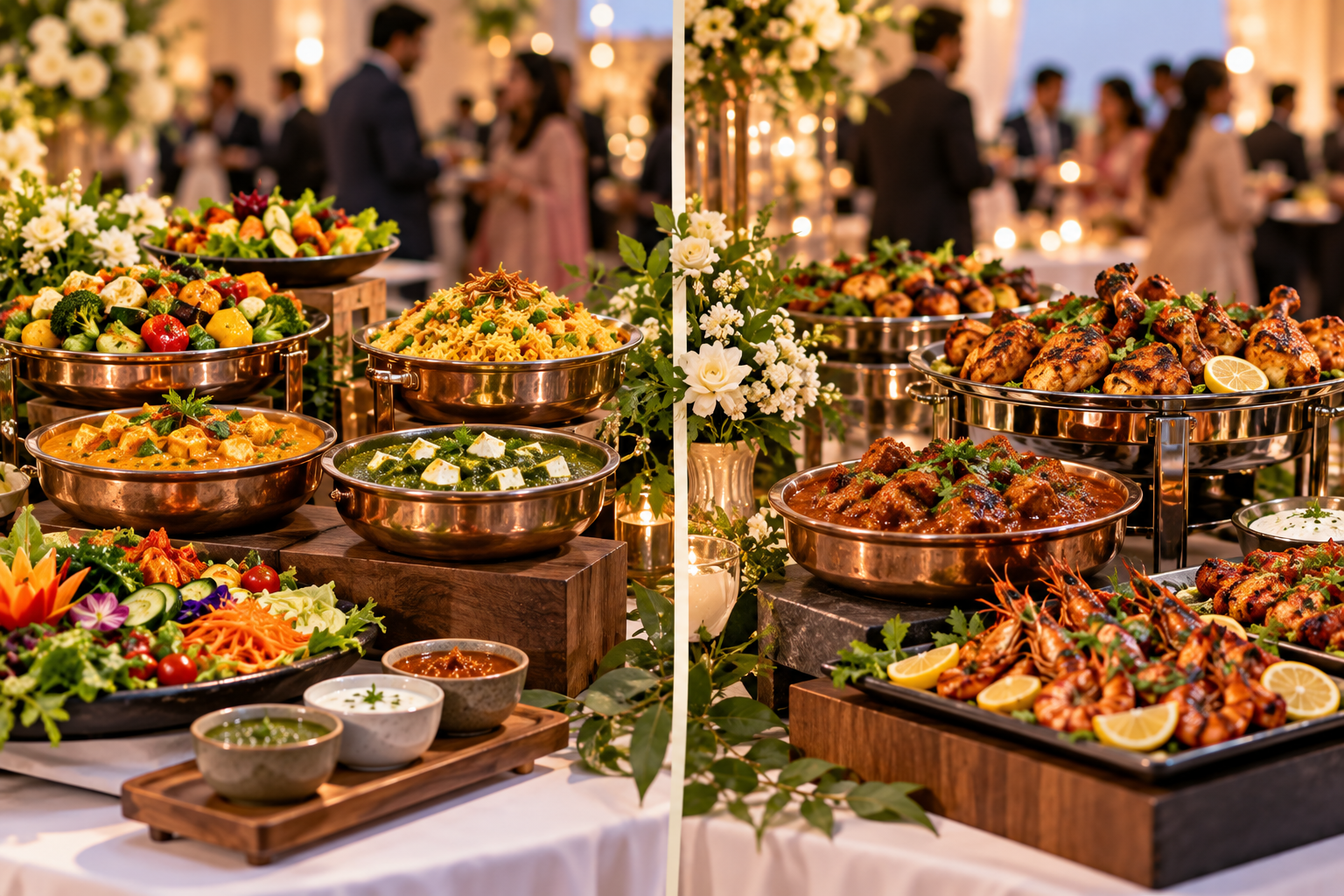
Building an Appealing Vegetarian Menu
Vegetarian food can offer plenty of variety when the menu is planned thoughtfully. Include dishes with different flavors, textures, colors, and cooking styles rather than relying on several similar curries.
A well-rounded vegetarian menu could include:
Starters:
Paneer tikka, vegetable kebabs, crispy corn, mushroom starters, or regional snacks.
Main Course:
Paneer preparations, dal, vegetable curries, kofta, regional specialties, and seasonal vegetables.
Rice & Breads:
Vegetable biryani, pulao, steamed rice, naan, roti, paratha, or other traditional breads.
Accompaniments:
Fresh salads, raita, chutneys, pickles, papad, and other sides.
Desserts:
Gulab jamun, rasmalai, kheer, ice cream, halwa, or traditional regional sweets.
Choosing the Right Non-Vegetarian Options
Non-vegetarian dishes can add variety and richness to an event menu. However, you don't need a large number of dishes to create a satisfying selection.
Depending on the cuisine and occasion, consider options such as:
-
Tandoori or grilled chicken
-
Chicken curry
-
Chicken biryani
-
Fish preparations
-
Seafood dishes
-
Kebabs and grilled starters
-
Regional meat specialties
Choose dishes that complement the vegetarian menu instead of creating two completely separate dining experiences.
How to Decide the Right Veg-to-Non-Veg Ratio
There is no universal ratio that works for every event. Start by understanding your guest list.
For example, a wedding with a predominantly vegetarian guest group may require a larger vegetarian selection, while a corporate event with a mixed audience may benefit from a broader combination of both.
Your caterer can also help estimate quantities based on:
Planning quantities carefully helps ensure that guests have enough choices while reducing unnecessary leftovers.
Don't Forget Dietary Requirements
A great menu should consider more than just veg and non-veg preferences.
Before finalizing your menu, check whether guests require:
Clearly identifying different dishes during service can also make it easier for guests to make informed choices.
Keep Vegetarian and Non-Vegetarian Food Properly Separated
For mixed menus, food handling and presentation are especially important.
Vegetarian and non-vegetarian dishes should be prepared and served using appropriate separate utensils and clearly designated serving areas. This helps maintain hygiene, avoids confusion, and respects guests' dietary preferences.
An experienced catering team should be able to plan the kitchen workflow and buffet layout accordingly.
Create Variety Without Overloading the Menu
More dishes don't necessarily mean a better menu. Offering too many similar items can increase costs without adding meaningful variety.
Instead, create a menu where each dish serves a purpose. Combine different flavors, textures, colors, and cooking styles to give guests a well-rounded experience.
For example, a menu could combine:
Light starters → flavorful main courses → rice and breads → fresh sides → desserts
This creates a natural progression throughout the meal while keeping the selection manageable.
Work With Your Caterer
Your caterer can play an important role in turning your menu ideas into a practical event plan.
Discuss your guest count, preferred cuisine, budget, dietary requirements, service style, and special dishes before finalizing the menu. A professional catering team can then recommend suitable combinations and quantities.
At The Cater, customized catering options can help you create menus for weddings, corporate events, family functions, and other celebrations based on your specific requirements.
A Menu Designed for Everyone
A successful event menu isn't about choosing between vegetarian and non-vegetarian food. It's about creating a thoughtful combination that gives every guest something they can enjoy.
With the right planning, quality ingredients, suitable portions, and professional catering service, your menu can become one of the highlights of the celebration